
Il ne s'agit pas seulement de montrer le monde,
mais de montrer aussi ce qu'on y ressent...

When I watch Life living, I hear its stories...
about my feeling
Click- Catch the moment, take the photo. This irrational pleasure, shared amongst the worlds' photographers each time they press the shutter release. Click-emotion, emotion-click. Mmmm…
To me, as I take a picture, I feel like I am pilfering fragments from Time. A voyeur of moments, I seek slices of living, hoping to unfold its deeper secrets.
about my approach
When I think photography, I cannot avoid relating to painting. To the technical representation of a subject, but also to the painter, the individual witness/interpreter of the moment caught on the canvas (or the photo). And, in the end, I think of the passage of time, frozen on a colored canvas. And we, photographers, are the offsprings of these painters. It is they who taught us to observe, to frame/de-frame, to construct/deconstruct, etc. all that we see, in order to better "represent" it.
How to bring the observer to go beyond the first impression and sense the intimate secrets that lie within the instant of living that is immobilized in the frame?
This is a question I have been struggling with for years. How can I transmit the emotion that I feel facing the miracle of Life? Remind the spectator that each moment est sacred, a highly improbable miracle.
At the time of the shot, there is always more going on than that what is captured by the frame. There is, of course, a context, a location, a story... It is the success or failure to reproduce these hidden elements that often make a picture "good" or not. For me, a picture is also a witness of particular unique moment. Like a snapshot of "existence". A visible marker of stardust, the elements of the Universe, us included.
So I went back to basics for inspiration. I took a deeper look into the craft of painting. The impressionists mainly; attracted by their desire to bring personal feelings into their work. With each stroke, each layer, displaying their own"humanity", they created paintings that went beyond the primary function of "presenting the world" to include a humane and temporal interpretation (dimension).
When taking a photo, this personal feeling inevitably influences the framing and the moment the shutter is released. End of Phase 1.
Phase 2, Post-Production.
It's at this stage that I work on bringing out the the "moment" felt that I am talking about. As I treat the original shot*, I focus on volume and texture in an attempt to transcend the basic nature of the image. Barely noticeable at first glance, the treatment appears as "perception accidents", triggering little lights in the viewers mind, inducing a different feeling to the photo. My intention is to draw the eye to different parts of the picture and bring the spectator to look a second time. Closer. As the textures and volumes change the perception, his/her imagination starts to wander on its own, filling in the gaps with their own stories. And, in the end, experience the picture as a personal experience rather than a simple photography, no matter how informative the original content. (see illustration opposite)
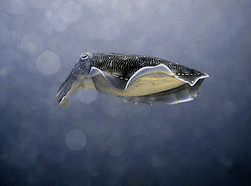
original picture

treated with Photoshop™
*treatment of original shot: without ever changer the content, I work on the contours and textures in PhotoShop using numerous filters and plug-ins
about other stuff
Before talking about my personal feelings, it's important to remember that a picture is first of all about the original beauty of its subject. "Gleeful is one who lays upon the world the eye of the photographer." (popular saying?)
But not only…
about communicating
Anything to say? A remark, a critic, a question? Maybe even a compliment?
Or maybe nothing special? Let's talk.